Creativity often functions like a rechargeable battery. For those deeply immersed in the worlds of digital sound design, gaming, and multimedia production, the constant cycle of output can lead to a subtle flattening of sensory perception. You may find that your compositions begin to echo earlier work or that your approach to game mechanics feels repetitive. When the environment you inhabit for your daily creative tasks becomes too familiar, it can stifle the spontaneous sparks of innovation that often define groundbreaking projects.
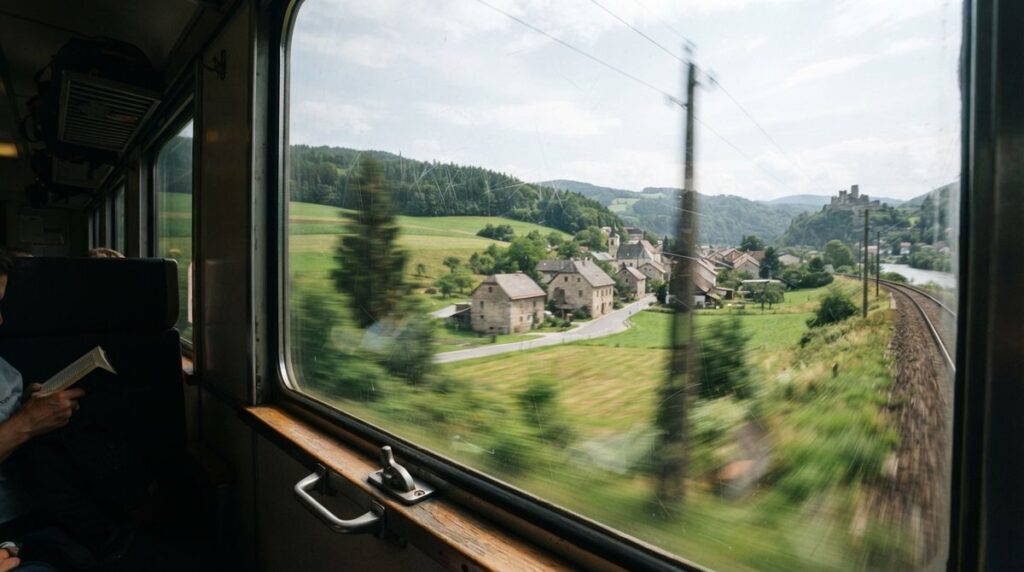
Stepping away from the studio or the console is not merely a vacation; it is a vital practice for resetting your creative perspective. Immersive travel forces the brain to process new environments, sounds, and rhythms, which can subconsciously influence how you approach digital media. By consciously shifting your surroundings, you provide your mind with a fresh palette of experiences that can eventually find their way back into your work, whether through a more complex soundscape or a more nuanced understanding of atmospheric design in your projects.
The Psychology of Environmental Change
The human brain thrives on novelty. When you are constantly situated in the same room, surrounded by the same monitors, instruments, and lighting, your brain tends to rely on established neural pathways. This is efficient for productivity but detrimental to radical creativity. Engaging with an entirely new environment disrupts these habitual patterns, forcing you to observe the world with heightened awareness. You begin to notice the subtle interplay of light, the texture of background noise in a bustling market, or the rhythmic pacing of a foreign city.
For a musician or a game designer, this is a form of passive research. You are not actively trying to compose or build; you are collecting sensory data. The way sound carries in an open landscape versus a narrow urban alley, or how color palettes differ in different climate zones, provides a vast library of inspiration. This mental collection becomes a resource you can draw upon once you return to your workspace, allowing you to build experiences that feel grounded, authentic, and emotionally resonant.
Seeking New Perspectives in Uncharted Territories
To truly break out of a creative plateau, you need to challenge your sense of routine and comfort. This does not mean you need to seek extreme experiences, but rather that you should look for environments that feel distinct from your everyday reality. Immersing yourself in a landscape that forces you to navigate new social and physical realities can significantly broaden your outlook on storytelling and aesthetic choices.
To expand your creative horizon, consider looking at exploremysoul.com as a starting point for finding adventures that challenge your usual sensory perception. The goal is to move from being a consumer of familiar experiences to an explorer of the unknown, ensuring that your future creative output carries the depth and variety of the real world. By engaging with unfamiliar landscapes, you learn to appreciate how diverse environments shape human experience, which is a crucial insight for anyone designing interactive worlds.
Leveraging Tranquility for Creative Clarity
Sometimes, the chaos of creative life requires a complete opposite approach to regain focus. When you have been over-stimulated by complex digital projects and the fast-paced nature of modern entertainment, a period of profound quiet can be transformative. This is the difference between active exploration and passive restoration. A calm, curated environment can help you strip away the unnecessary noise that often builds up in your creative process.
Sometimes, the best way to focus is to step away entirely, which is where a dedicated escape like Santorini-Resort can provide the stillness required to refine a complex composition or game level design. In such spaces, the absence of familiar stressors allows your subconscious to synthesize the ideas you have been struggling to connect. You may find that a difficult harmonic progression resolves itself, or a persistent problem with game balance becomes clear when you are removed from the immediate pressure of the production cycle.
Weaving Global Influences into Digital Media
The final phase of this process is the integration of these external experiences back into your digital work. It is easy to compartmentalize travel as a separate part of life, but if you want to remain at the forefront of your craft, you must bridge the gap between your experiences and your output. This requires a deliberate effort to translate the feelings, sounds, and visual concepts you encountered into the technical language of your work.
When returning from these journeys, you can improve your output by adapting global techniques to your projects, ensuring that the unique textures you encountered remain central to your creative identity. This is not about mimicry; it is about taking the essence of a distant sound or a specific visual rhythm and reinterpreting it through your own technical lens. Whether you are using field recordings to layer into a track or using architectural styles from your travels to influence your environment design, the key is to ensure that these influences feel integrated rather than imposed.
Building a Sustainable Creative Habit
To keep this creative momentum, you should try to incorporate the lessons from your travels into a regular practice. It is not feasible to travel constantly, but you can build a framework that mimics the benefits of exploration even when you are back at your workstation. The objective is to maintain that sense of wonder and openness, rather than letting the daily demands of production close it down again.
- Maintain a journal of sensory impressions from your travels, noting sounds, colors, and feelings to revisit during difficult project phases.
- Curate a digital library of your own photographs and field recordings to use as references for textures, palettes, and sonic moods.
- Dedicate time to study artistic and musical traditions from cultures you have visited, deepening your understanding of the context behind your inspirations.
- Challenge yourself to implement one new technique or design concept you encountered, regardless of how small it seems in the context of your project.
The journey from your initial spark of inspiration to a finished piece of work is rarely a straight line. By allowing the world outside your studio to shape the work inside it, you become a more versatile and adaptable creator. Travel, in its many forms, serves as a bridge between the familiar and the undiscovered, and it is on that bridge that some of the most compelling digital experiences are formed.