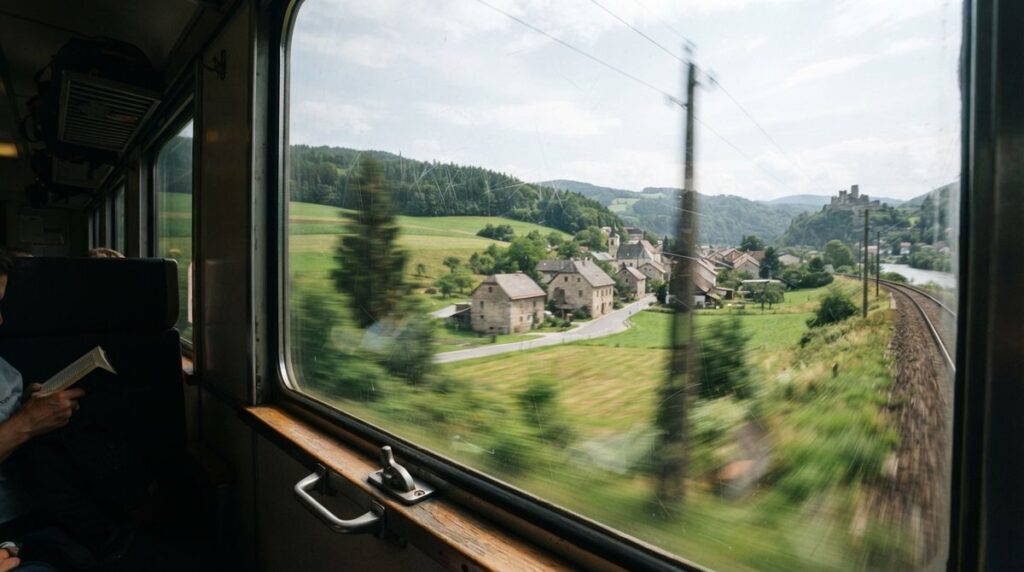
For those involved in the creation of music, sound design, or the atmospheric depth of video games, the search for inspiration often begins within the confines of a studio. While technical skill is essential, the authentic textures of sound must often be sought in the physical world. Taking a deliberate approach to travel can function as an essential component of your creative process, providing raw material that adds layers of reality and depth to your digital projects. By observing how sound behaves in different environments, you can return to your work with a refreshed perspective and a deeper understanding of how to craft truly immersive experiences for your audience.
Understanding Your Auditory Inspiration
Every environment possesses a unique sonic signature, influenced by architecture, natural geography, and the human activity contained within it. When you travel, you are essentially field recording through your own ears. Instead of just seeing the sights, focus on the way sound waves interact with the space around you. Notice how echoes bounce off ancient stone walls, how wind rustles through different types of foliage, or how the density of a bustling city market changes the character of ambient noise. This is not about cataloging sounds for later use, but about internalizing the way environments feel. Understanding the relationship between space and sound is foundational for anyone building a world, whether that world is entirely digital or a composition intended for listeners.
When you are in a new environment, try to isolate specific auditory elements. Listen for the underlying hum of a town, the rhythmic patterns of local transportation, or the distinct frequency of the water moving in a nearby fountain. These are the elements that bring authenticity to sound design. By consciously analyzing what makes a specific place sound the way it does, you begin to build a mental library of textures that can be adapted and transformed back in your workspace. You are learning to distinguish between natural noise and man-made sound, a skill that is vital when you need to layer audio to tell a compelling story.
Researching Global Soundscapes for Creative Projects
Preparation is key when you decide that travel will be part of your creative development. It is rarely enough to simply arrive at a destination and hope for auditory inspiration. You need to identify locations that offer the specific types of environments that your current project requires. If you are developing a game set in a historical or culturally distinct region, research how those places feel, move, and sound. You can explore regional travel guides to understand the atmosphere of specific destinations, identifying areas that might offer a rich diversity of sonic landscapes. For instance, if you are looking to understand how the architecture and daily life of a beautiful, historically rich region might influence your work, you might visit montefeltro.net to gain deeper insight into the characteristics of such a place, allowing you to imagine the potential auditory experiences more clearly.
Research should focus on the intersection of geography and culture. Look for information that describes the landscape, the types of materials used in local architecture, and the rhythm of daily life. These factors are the primary determinants of how an environment sounds. When you understand the context of a place, you are better equipped to look for the sounds that define it. This research phase allows you to create a thematic roadmap for your trip, ensuring that you seek out the specific types of environments that will offer the most value to your creative output.
Integrating Environmental Audio into Gaming and Music
Once you have returned from your travels, the task of integrating your experiences begins. The goal is not necessarily to recreate the exact sounds you heard, but to capture the essence of those environments and apply them to your creative work. If you have been exploring how travel influences your craft, it is helpful to look back at our earlier guidance on reseting your creative soundscape and vision to help synthesize these new experiences with your previous habits. The memories of how light played off the walls, or how a space felt restrictive or open, can inform your decisions about reverberation, EQ, and layering in your compositions or game world design.
Consider the following steps to effectively integrate these experiences:
- Identify the core emotion or atmosphere you experienced in the target location.
- Select the instruments or sound samples that best represent that emotional space.
- Layer these elements, adjusting the frequency range to mimic the physical space you observed.
- Use panning and volume automation to simulate movement through the environment.
- Avoid over-processing the final result, keeping a sense of the original texture.
By applying these steps, you translate the abstract feeling of a place into something concrete. If you were moved by the open, breezy sound of a coastal village, consider how you might use high-frequency textures and subtle panning to recreate that openness in a virtual scene. The intention is to imbue your project with a sense of place that goes beyond standard library sounds.
Maintaining Your Creative Focus While Traveling
The primary challenge when traveling for creative purposes is maintaining focus. It is easy to become overwhelmed by the sheer volume of sights and activities, losing the intent of your journey in the process. To counteract this, maintain a clear objective for each day of your trip. Whether your goal is to study the way sound changes in different terrains or to observe the rhythm of life in a new city, keep that goal at the forefront of your mind. If you find that your travel style is more about living like a local and spending extended time in different places, you might find useful inspiration in the lifestyle shared on Morskoiboy.com, which highlights the value of immersing oneself in diverse living experiences to keep a fresh perspective.
Do not attempt to do everything. A travel itinerary should be designed to support your creative process, not to exhaust you. Dedicate specific hours to active listening and observation, and allow other times for simple relaxation and enjoyment. If you are constantly recording or frantically trying to document everything, you will fail to truly experience the environment. The goal is to absorb the atmosphere. Sometimes, the most valuable insights come when you are not actively looking for them, but rather just being present in the space.
Turning Travel Memories Into Lasting Sound Files
The final phase is translating the internalized atmosphere into actual digital assets. This is where your technical skill meets your creative vision. Whether you are creating synthesized textures or manipulating recorded samples, use the memory of your travels to guide your choices. If your journey involved time in a dense forest, recall the way the dense canopy filtered the sound, creating a muffled, intimate acoustic environment. You can replicate this by using low-pass filters and subtle saturation on your sound elements. If you spent time in a wide-open plaza, think about the way sound dissipated and the long decay of the reflections.
This process is deeply personal and iterative. You will likely go through several versions before you feel that a sound truly captures the essence of what you experienced. Do not rush this phase. Your digital project is a reflection of your interpretation of the physical world. By consciously bringing the textures and atmospheres of your travels into your studio, you are not just making something that sounds good; you are creating something that has depth, resonance, and a story behind it that will be felt by the audience.
Taking a trip can be one of the most effective ways to break through a creative rut or to add a layer of sophistication to your work. By approaching travel as an extension of your studio, you transform the act of exploring into an essential part of your artistic development. Every environment you visit provides a lesson in how sound interacts with the world, and every memory you bring back is a resource for your future projects. By staying observant, focused, and intentional, you can turn your travels into the foundation for truly memorable and immersive audio experiences.