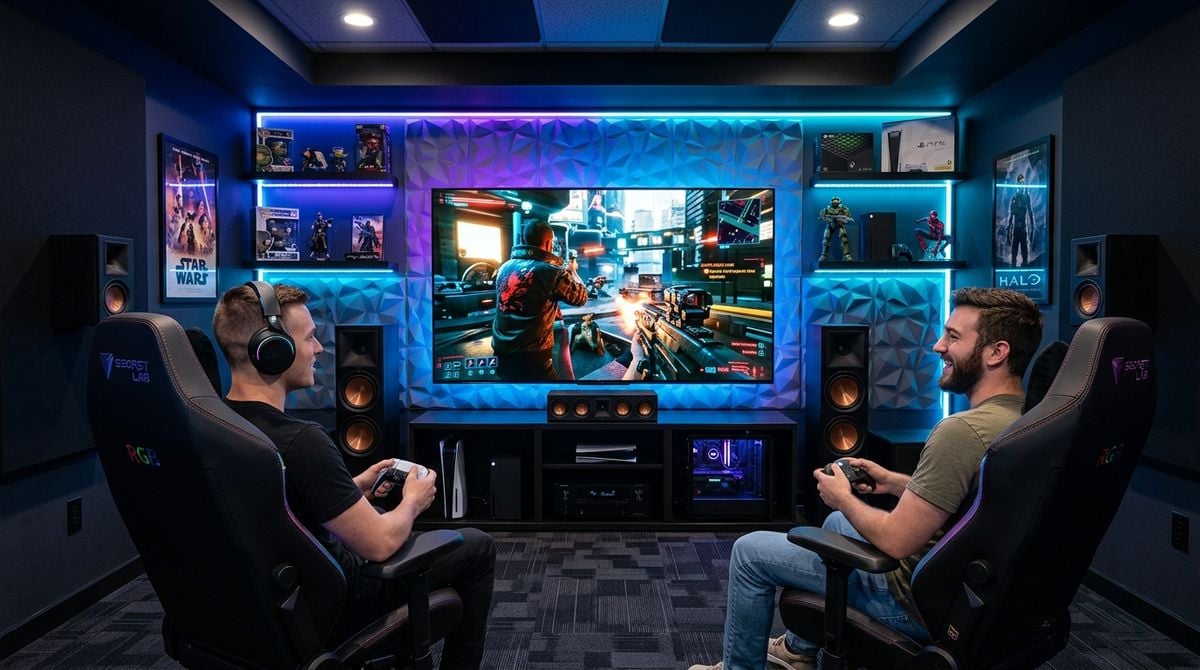
Setting up a space where interactive gaming and high-fidelity music coexist requires thoughtful planning. A spare basement room provides natural separation from the rest of the household, giving you room to play dynamic game audio, gather friends for tournaments, and enjoy late-night listening sessions without disturbing others.
Converting an underused lower level into an inviting den involves more than rolling out a couch and plugging in a screen. You need an environment that handles active foot traffic, softens acoustic reflections, and keeps guests comfortable during long sessions. Approaching the project systematically ensures that every corner serves a distinct, enjoyable purpose.
Selecting a Durable Foundation for Heavy Gear and Foot Traffic
Basements present distinct environmental challenges that can affect standard furnishings, especially regarding moisture and heavy hardware. Consoles, amplifiers, speaker stands, and modular seating put continuous pressure on the floor. Meanwhile, casual gatherings bring the inevitable risk of spilled drinks, dropped snacks, and dirty shoes. Choosing a resilient surface protects both your equipment and the room itself.
Many entertainment enthusiasts discover that sealed floor finishes provide the ideal blend of durability and effortless cleanup. If you are exploring protective floor coatings that resist moisture, heavy impacts, and abrasive scuffs, examining ideas from Angelos Epoxy Flooring offers practical insight on resilient surfaces for lower-level rooms. A solid, seamless base makes it simple to roll heavy equipment racks into place and wipe away accidental spills without staining.
After establishing a sturdy, sealed foundation, you can introduce thick area rugs beneath your primary seating and speaker stands. This layered strategy preserves the durability of a sealed floor while dampening footstep noise and absorbing sharp sound reflections. It also creates a warm visual zone that makes the room feel comfortable rather than cold.
Shaping the Visual Atmosphere and Room Layout
A basement can quickly feel cold or cluttered if interior decoration is treated as an afterthought. Designing an inviting environment means balancing gaming aesthetics with comfortable, human-centered interior styling. Warm ambient lighting, modular seating, and cohesive colors transform an uninspiring cellar into an appealing retreat that invites people to relax.
Careful space planning establishes a natural flow that separates intense gaming stations from quiet conversation spots. For fresh inspiration on making shared spaces both beautiful and genuinely livable, exploring layout ideas on decoratingparty.com can help you design an arrangement tailored for social evenings. Thoughtful design elements like low-profile shelving for media, fabric wall hangings, and dimmable accent lamps keep the room organized and comfortable.
Lighting choices deserve close attention in any room dedicated to displays and sound. Harsh overhead fixtures wash out screens and cause uncomfortable eye fatigue during long sessions. Instead, place soft, indirect backlights behind your main display and set warm floor lamps in the corners. Layered lighting lets you dim the room for immersion while maintaining enough ambient light for safe movement.
Organizing Dedicated Zones for Different Activities
A successful multi-purpose lounge avoids cramming every activity into a single cluster. When friends visit, some may want to play multiplayer games, while others prefer chatting or browsing records. Dividing your basement into distinct stations ensures that everyone enjoys their preferred pastime without competing for space or volume.
Here is a practical way to divide your entertainment space into functional zones:
- The primary media hub, centered on the main display, game consoles, and front audio speakers.
- The quiet listening station, featuring comfortable armchairs, headphone gear, and music storage away from screen glare.
- The refreshment counter, offering a small fridge and table for snacks away from electronic hardware.
- The open movement area, kept clear of low tables and loose cables to allow room for active party games.
Cable management is vital whenever a room serves multiple functions. Trailing power cords and audio cables across walkways creates tripping hazards and risks damaged ports. Use low-profile floor raceways or run wires along baseboards with discreet clips. Keeping wiring bundled maintains a clean visual appearance and protects your electronics from accidental disconnections.
Tuning Room Acoustics for Games and Music Playback
Basements typically feature concrete walls and drywall ceilings, which can harm audio clarity. Game soundtracks rely on precise directional audio for spatial cues, while recorded music requires tonal balance without booming bass or harsh treble flutter. Addressing room acoustics allows you to hear subtle details clearly without pushing the master volume to fatiguing levels.
Mounting acoustic absorption panels on side walls at primary reflection points brings an immediate improvement in audio definition. You can locate these spots by having a friend slide a mirror along the wall while you sit in your listening chair; whenever you see a speaker reflection, mark that position for a panel. Bookshelves and fabric furniture also act as natural sound diffusers.
Subwoofer placement requires careful experimentation to avoid boomy low frequencies. Placing a subwoofer directly in a corner often creates an exaggerated bass response that muddies dialogue and musical midrange. Instead, position the subwoofer slightly along a front or side wall, and place an isolation pad beneath it. Isolating the cabinet decouples vibrations from the floor, preventing mechanical rumble from traveling upward.
Preparing Entertaining Sessions for Visiting Guests
Once your basement lounge is equipped and tuned, hosting friends becomes a regular highlight. A great social evening depends on how easily your guests can interact with the room. Because visitors arrive with varying familiarity with games and sound equipment, the setup should feel approachable rather than intimidating.
Maintaining a diverse media collection ensures that everyone feels included right away. If you want practical advice on selecting approachable games that anyone can enjoy without complicated tutorials, take a look at our guide on choosing video game titles for visitors before your next gathering. Pair these pick-up-and-play games with a warm background playlist of instrumental game soundtracks or low-tempo music to keep the room energetic and relaxed.
Keep several charged wireless controllers arranged in an attractive tray on the table. Label your audio source selector switches and remote controls with plain names so anyone can switch from console audio to music playback without confusion. Small touches like accessible charging ports and labeled inputs make your lounge feel like a welcoming, professional venue.
Transforming an unfinished or underutilized basement into a dedicated lounge provides a permanent sanctuary for your entertainment hobbies. By combining a durable, easy-to-clean floor with acoustic treatment, layered lighting, and defined activity zones, you build an environment suited for both solitary listening and lively group gaming. Take time to refine each element step by step, and enjoy creating a retreat that brings people together through sound and play.