Taking your entertainment setup outside changes the dynamic of an entire gathering. While indoor sessions are comfortable and familiar, an open-air event under an evening sky brings fresh energy to both cooperative gaming and casual musical collaboration. Bringing friends together for split-screen races, rhythm challenges, and improvised guitar grooves creates an atmosphere that feels closer to a neighborhood festival than an ordinary gaming night. It allows players and musicians to share the same space, trade turns on controllers and instruments, and enjoy fresh air while sharing favorite tracks.
Organizing this kind of event requires thinking through several practical elements that indoor living rooms handle automatically. When stepping outside, you must account for natural sunlight, dispersed acoustic sound, cable protection, and steady power distribution. Approaching your setup step by step ensures that technical headaches do not disrupt the shared excitement of a multiplayer tournament or an impromptu acoustic set.
Mapping Out Your Space and Acoustic Layout
Open yards and patios do not have walls to trap sound, which changes how both game audio and live instruments behave. Lower bass frequencies travel quickly across open grass, while high treble tones can feel thin or lost in ambient breezes. When positioning your display screen and sound equipment, look for natural barriers such as a patio fence, an exterior house wall, or a cluster of garden shrubs. These surfaces help reflect mid-range sound back toward your seating area without forcing you to raise the master volume to disruptive levels.
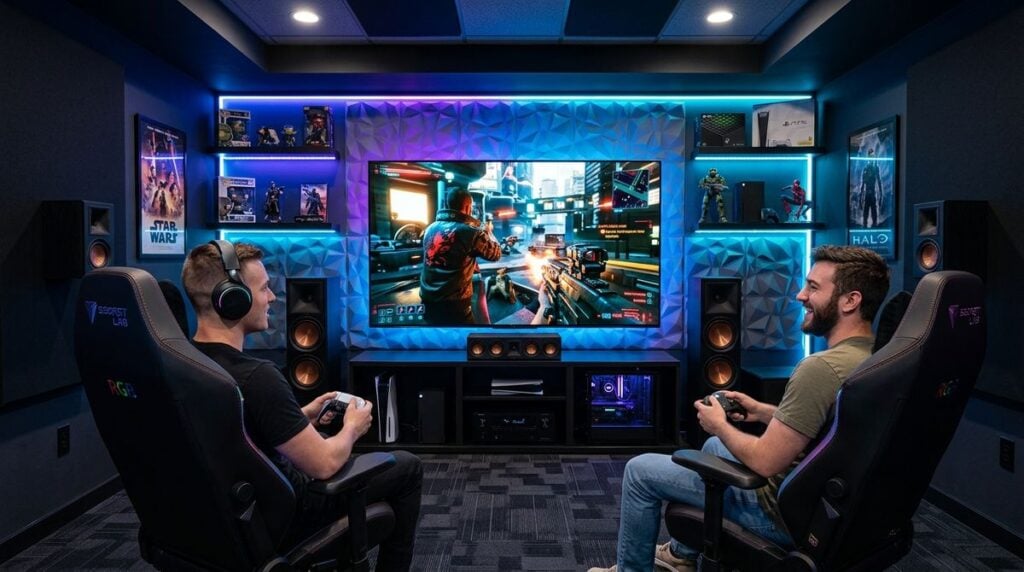
Orientation also dictates screen visibility. Aim your projector or television display away from the setting sun so that lingering daylight does not wash out the picture during early matches. Arrange folding chairs and floor cushions in a wide semicircle to give players comfortable sightlines while leaving an open area to the side for instrument cases and microphone stands. Earlier, we explored the principles of sound management and layout when creating a dedicated basement lounge, but an open-air environment requires spreading sound wider rather than tamping down room reverberation.
Managing Reliable Power for Outdoor Gear
Supplying stable electricity to delicate audio mixers, musical amplifiers, and modern gaming hardware presents the biggest logistical hurdle for an outdoor evening. Running several long household extension cords from indoor wall sockets often causes voltage drop, trips circuit breakers, or creates dangerous tripping hazards across pathways. Electronic consoles and digital audio interfaces need clean, steady current to avoid sudden restarts or audio humming caused by dirty electrical ground lines.
Using a dedicated portable power source positioned safely away from the seating circle offers a dependable solution. Dual-fuel inverter units that run on propane or gasoline provide quiet, regulated electricity that protects sensitive internal microchips from voltage fluctuations. Propane burns cleanly and eliminates strong exhaust fumes near your guests. When researching suitable models, checking detailed comparisons at bestdualfuelgenerator.com helps you understand which portable units offer clean inverter output and low operational noise for entertainment purposes.
Once your power station is situated downwind and at a safe distance, use heavy-duty outdoor extension cords fitted with surge-protecting power strips at the equipment tables. Group low-draw devices like handheld consoles, monitors, and audio mixers on one power strip, while routing instrument amplifiers or active PA speakers to a separate line. Keep all electrical connection points off damp grass by placing them inside weatherproof connection boxes or elevating them on small wooden blocks.
Balancing Live Sound and Gaming Audio
Combining live instruments with video game audio requires careful mixing so neither element overpowers the other. If players are competing in a rhythm title or a fast-paced platformer, they must hear sound effects and musical cues clearly to stay in sync. At the same time, live musicians playing alongside the game track need their instruments to blend smoothly with the digital score rather than clashing against it.
The easiest way to achieve this balance is by routing all audio through a small multi-channel compact mixer. Send the stereo output of your gaming console into dedicated mixer channels, and plug microphones or instrument direct boxes into the remaining inputs. From there, run the combined main output into powered stereo speakers facing the audience. Keeping a set of closed-back studio headphones nearby allows the person managing the mixer to check individual levels without guessing how the final balance sounds.
Drafting a Flexible Schedule and Activity Flow
An evening that blends two distinct hobbies succeeds when guests have clear opportunities to transition between playing games and playing music. Starting the gathering with low-pressure activities sets a comfortable tone. Casual party games, puzzle titles, or acoustic background music allow people to arrive, grab refreshments, and chat without feeling pressured to perform immediately.
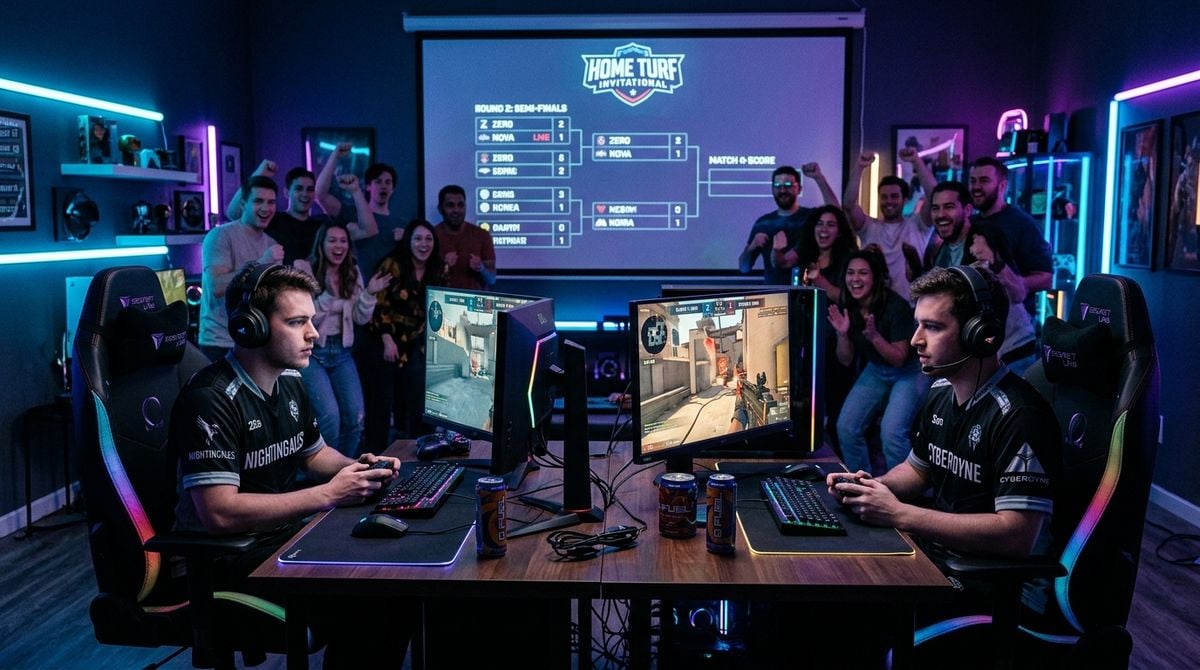
As dusk falls and screen contrast improves, shift the focus toward main events like a friendly tournament or collaborative jam sessions where players improvise over game soundtrack themes. Keep in mind that initial plans rarely survive contact with an active group of friends. Treating your event schedule as an evolving outline rather than an unchangeable script makes the night far more relaxed. Exploring the process mindset shared at rough-draft.net provides great perspective on working through early drafts of ideas and refining your approach gradually.
Essential Preparation Checklist Before Sunset
Preparing your outdoor area during daylight prevents stumbling around in the dark when cables tangle or settings need adjustment. Complete these key steps before your guests arrive:
- Test every cable, instrument jack, and video display connection during early afternoon daylight.
- Secure all outdoor power cables along walkways using rubber cable ramps or heavy gaffer tape.
- Place all electrical splitters and sensitive equipment off bare dirt and away from damp grass.
- Check sightlines from every planned chair to confirm that outdoor lighting will not glare on the main screen.
- Set master volume limits early to ensure sound carries comfortably without bothering neighboring houses.
Protecting Gear and Wrapping Up Smoothly
As the night winds down, temperature shifts can cause evening moisture or dew to settle on exposed equipment. Electronic consoles, wooden guitar bodies, and delicate speaker cones do not tolerate damp night air well. Keep lightweight tarps or instrument gig bags on hand near the stage area so gear can be covered quickly if humidity rises or temperatures drop unexpectedly.
When the final tournament bracket concludes and the last song finishes, shut down equipment in reverse order: turn off amplifiers and powered speakers first, followed by mixers, consoles, and finally your main power supply. This simple sequence prevents sudden audio thumps that could strain speaker drivers. Taking a systematic approach to pack-down ensures that your gear stays safe and ready for the next creative gathering under the stars.