Modern video games feature intricate soundscapes driven by sophisticated interactive audio engines, adaptive music systems, and thousands of environmental effects. While development teams dedicate substantial energy to sound design and composition, the complexity of dynamic playback introduces technical challenges that standard gameplay testing often misses. Missing dialogue cues, audio clipping, phase cancellation, voice priority dropouts, and sudden volume spikes can severely undermine an otherwise polished player experience. Building a specialized remote game audio quality assurance agency addresses this critical vulnerability by providing focused technical listening, platform compliance verification, and rigorous audio bug tracking for development studios.
Remote audio testing offers distinct practical advantages for independent game studios and distributed development teams seeking specialized verification without maintaining dedicated in-house listening rooms. Unlike general software testers who evaluate visual assets, collision meshes, and quest scripts, dedicated audio testers focus exclusively on auditory behavior across varied consumer equipment and playback modes. Creating a sustainable agency in this niche requires disciplined listening procedures, precise bug documentation methods, and dependable operational infrastructure that connects distributed audio specialists with game developers seamlessly.
Defining Core Audio Testing Capabilities
A specialized audio testing firm must offer services that extend far beyond casual listening sessions. Professional verification covers interactive mix behaviors, dialogue localization timing, dynamic range compression across platforms, and middleware integration checks. Testers trace how sound events behave when complex player actions trigger dozens of simultaneous emitters, identifying instances where voice priority systems prematurely cut off dialogue or where environmental reverb fails to update when transitioning between distinct acoustic spaces. Verifying occlusion parameters and audio attenuation curves ensures that sound propagation accurately reflects player perspective in real time.
Another essential responsibility involves evaluating spatial positioning, binaural headphone rendering, and surround sound formats. As developers create increasingly deep virtual environments, proper acoustic propagation becomes critical for competitive gameplay, navigation, and narrative immersion. Readers interested in the acoustic engineering behind three-dimensional soundscapes can explore our previous guide on launching a spatial audio studio for deeper technical background. Verifying that object-based audio cues track accurately across varied multichannel environments ensures that players perceive threat directions, environmental reflections, and atmospheric details exactly as intended by the creative team.
Establishing Distributed Testing Environments
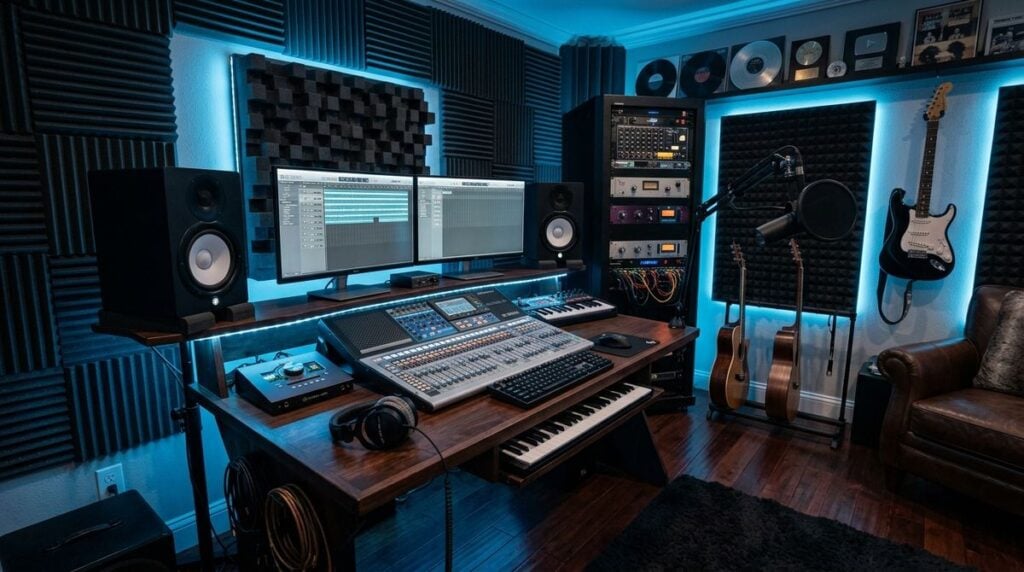
Operating a remote testing agency requires strict standards for hardware, software, and acoustic spaces across all participating team members. While general testers can work from basic consumer laptops, audio testers need neutral reference monitors, open-back and closed-back headphones, and calibrated audio interfaces. Testing across a wide variety of reproduction hardware—including budget gaming headsets, television speakers, soundbars, and mobile devices—guarantees that audio balance remains coherent across every potential playback scenario. Calibrated sound pressure levels must be maintained across sessions to prevent subjective mix discrepancies.
Maintaining focused listening accuracy across long shifts demands consistent attention to residential workplace design. Fatigue and ambient room noise can easily distort subjective judgments about mix balance, frequency masking, and low-level noise floors. Remote team coordinators frequently draw structural inspiration from resources like work-at-home-net-guides.com to design quiet home workspaces, manage ergonomic testing stations, and establish healthy listening break routines. Creating quiet, acoustically reliable home environments prevents ear fatigue, protects critical listening sensitivity, and keeps bug discovery consistent across entire testing cycles.
Creating Systematic Bug Reporting Procedures
The primary value of an audio quality assurance team lies in its ability to translate subjective auditory anomalies into objective, actionable bug tickets that audio programmers and sound designers can solve quickly. Describing an issue as simply sounding strange or harsh provides little value to development teams under tight deadlines. Instead, reports must pinpoint playback conditions, trigger states, game coordinate locations, and the precise middleware events associated with the failure.
Every effective audio bug ticket generated by your agency should follow a standardized reporting structure:
- Precise reproduction steps detailing player movement, camera perspective, and game state triggers.
- Telemetry data identifying active voice counts, middleware event names, and snapshot transitions.
- High-fidelity audiovisual captures showing synchronized peak meters and accurate frequency behavior.
- Hardware profiles documenting output format, sound card settings, and peripheral speaker configuration.
Providing synchronized video captures with uncompressed reference audio allows audio leads to inspect waveforms and spectral views immediately. When a tester identifies phase cancellation, unintended sidechain ducking, or harsh inter-sample peaks, including direct spectral analysis within the ticket saves developers hours of speculative debugging. Structuring ticket templates with clear priority tags ensures that critical blockers receive immediate attention before public releases.
Managing Technical Infrastructure and Security
Game audio verification involves handling pre-release builds, unreleased intellectual property, and enormous proprietary sound asset repositories. A remote agency must implement dependable file transfer protocols, encrypted local storage, and secure version control systems. Ensuring that distributed team members can download multi-gigabyte daily builds without network throttling or data corruption is essential for maintaining production schedules and meeting development milestones.
Building sound operational foundations requires adopting structured management tools and robust administrative frameworks. Many service leaders consult specialized platforms such as businessserviceschicago.com to streamline operational systems, implement secure client communication channels, and establish disciplined operational workflows. Proper data governance, ironclad confidentiality agreements, and centralized access controls reassure development studios that their unannounced game projects remain thoroughly protected throughout testing.
Developing Partnerships with Game Studios
Securing ongoing contracts requires positioning your testing agency as a collaborative partner rather than an adversarial checkpoint. Game audio designers often operate under tight production schedules and welcome specialized assistance that protects their creative vision. Offering focused packages—such as pre-certification platform checks, dialogue mix reviews across localized languages, or interactive performance profiling—allows smaller studios to engage your services for specific development milestones without overextending their production budgets.
Maintaining transparent communication during intensive production periods builds lasting trust. Providing daily summary dashboards that highlight critical sound blockers, performance regressions, and mix inconsistencies gives creative directors clear visibility into the audio health of their project. When your reports consistently lead to cleaner launches, seamless audio integration, and positive player reception, studios will return to your agency for future titles.
The growing complexity of video game audio requires rigorous, specialized verification that matches the sophistication of modern interactive media. By uniting dedicated critical listening with meticulous technical reporting and secure remote operations, an independent audio quality assurance agency fills an indispensable role in contemporary game development. Establishing a structured agency allows passionate audio specialists to contribute meaningfully to memorable interactive entertainment, ensuring that every sound effect, ambient swell, and musical crescendo reaches players in flawless form.