The world of competitive gaming moves at breakneck speed, where split-second decisions determine tournament champions and every audio cue carries competitive weight. While video game developers invest immense care into creating rich interactive soundscapes, broadcasting that experience to a worldwide audience presents a complex technical puzzle. Managing an esports broadcast audio production company places your team directly at the intersection of live concert sound, broadcast television standards, and modern competitive culture. To succeed in this fast-growing sector, company leaders must pair audio engineering expertise with clear organizational practices.
Unlike conventional entertainment broadcasts, competitive gaming features a wide array of concurrent sound sources that compete for sonic space. Live casters deliver high-octane commentary, observers switch between distinct in-game character perspectives, team coaches communicate during tactical pauses, and venue crowds respond with sudden surges of cheering. Delivering an immersive yet balanced audio mix to streaming platforms requires steady operational planning, reliable signal routing, and composed team management during high-pressure live broadcasts.
Structuring the Live Competitive Sound Environment
In traditional athletic broadcasting, audio engineers focus on field microphones, referee calls, and commentary desks. Competitive video games demand an entirely different approach because the playing field exists in digital software. Your production crew must interface directly with spectator computers, tournament servers, and individual player audio feeds. Each competitive genre introduces its own balancing challenges. Team-based tactical shooters require sharp separation for subtle footsteps, weapon reloads, and spatial cues, while real-time strategy games require sweeping atmospheric elements that must never overshadow interface alerts or alert chimes.
Controlling acoustic bleed represents a continuous challenge within arena venues. When thousands of excited fans pack an arena, sound from massive venue public address systems inevitably reflects off hard surfaces. If this ambient roar enters caster microphones or player communication channels, the broadcast mix quickly degrades into a muddy wash. Equipping on-air talent with high-grade dynamic microphones featuring tight directional polar patterns keeps commentary clear. Training commentators on proper microphone distance and employing dedicated hardware filters further supports clean vocal reproduction under roaring arena conditions.
Equipping Your Crew with Resilient Audio Infrastructure
Modern esports productions rely on digital audio networking to transmit hundreds of audio channels across convention centers and arenas. Networked audio systems eliminate cumbersome analog snakes, allowing engineers to route voice communications, game audio stems, analyst desks, and arena sound systems through lightweight network cables. Implementing redundant network switches alongside isolated power distribution systems shields the production against unexpected hardware failures during critical tournament matches.
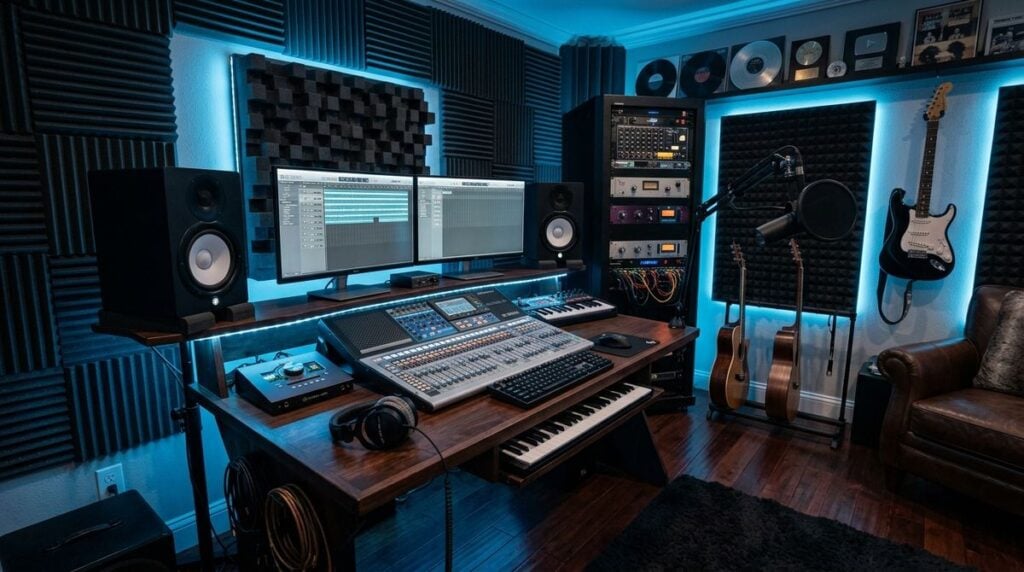
Many sound professionals entering the competitive gaming sector begin their careers in studio recording or post-production environments. Understanding the core acoustic treatments and isolation principles detailed in building a video game voice acting studio provides valuable perspective when constructing temporary on-site broadcast booths. While mobile production environments present unpredictable environmental noise, incorporating disciplined acoustic isolation into broadcast booths and mobile control rooms prevents low-frequency stage rumble from contaminating the primary transmission feed.
Standardizing Communications and Project Workflows
Technical proficiency alone cannot keep a production business afloat. A typical esports event involves dozens of external stakeholders, including game publishers, broadcast directors, stage managers, floor runners, and corporate brand managers. Establishing concise communication protocols across the entire production chain prevents costly delays during live broadcasts. Developing standardized protocols for intercom chatter, commercial segment transitions, and player interview setups ensures that your audio operators react swiftly when directors call for spontaneous rundown adjustments.
Beyond real-time intercom communication, running an audio enterprise requires precision in administrative tasks, service contracts, and project documentation. Sound directors frequently discuss technical requirements with event planners who may lack an engineering background. Reviewing practical resources such as BusinessPhrases enables audio business owners to master professional language, navigate modern project management software, and present commercial proposals in a polished manner that fosters client confidence and long-term trust.
Implementing a Rigorous Match Day Readiness Checklist
High-pressure live broadcasts leave zero room for basic configuration mistakes. A standardized pre-show checklist serves as an operational safety net, keeping technical directors and audio assistants unified during tight schedule turnarounds. Running through systematic verifications prior to every broadcast segment helps protect the production from avoidable technical glitches.
- Establish consistent gain staging and dynamic processing across all on-air commentator microphones.
- Verify multi-channel intercom paths between the broadcast audio booth, stage managers, and game observers.
- Test automated sidechain compression to ensure game sound ducks gracefully beneath active commentary.
- Confirm proper audio delay calibration on primary output feeds to maintain exact lip sync across broadcast video streams.
Reviewing Business Operations and Managing Expansion
When tournament stages power down and gear cases return to storage, productive company management shifts focus toward post-event evaluation. Audio entrepreneurs should routinely analyze equipment wear, review internal crew logs, and assess whether project budgets accurately covered staffing and logistics demands. Diversifying your company portfolio with complementary services, such as remote commentary mixing, tournament highlight sound design, or custom sonic branding for esports leagues, creates steady cash flow during seasonal competition breaks.
Long-term commercial durability requires studio owners to step away from the mixing desk and assess the overall health of their enterprise. Business leaders need to evaluate client acquisition pipelines, crew retention, and operational overhead to ensure steady growth. Exploring strategic management discussions on rea-evolution.com assists production executives in re-evaluating operational routines, refining marketing approaches, and building an adaptable business framework suited for an evolving digital entertainment marketplace.
Cultivating Lasting Partnerships with Tournament Organizers
The foundation of sustained success in esports audio lies in professional dependability. League organizers and game publishers operate under strict deadlines and intense public scrutiny. When an audio production company reliably protects unreleased game content, treats tournament talent with professional care, and delivers pristine broadcast sound across multiple competition days, it evolves from an interchangeable service vendor into a valued creative partner.
Operating an esports broadcast audio company requires a unique blend of sonic artistry, technical mastery, and organized business management. By establishing sturdy production pipelines, fostering clear communication across departments, and constantly refining your business operations, you can provide memorable listening experiences for gaming fans worldwide while building a thriving, durable enterprise in modern digital entertainment.