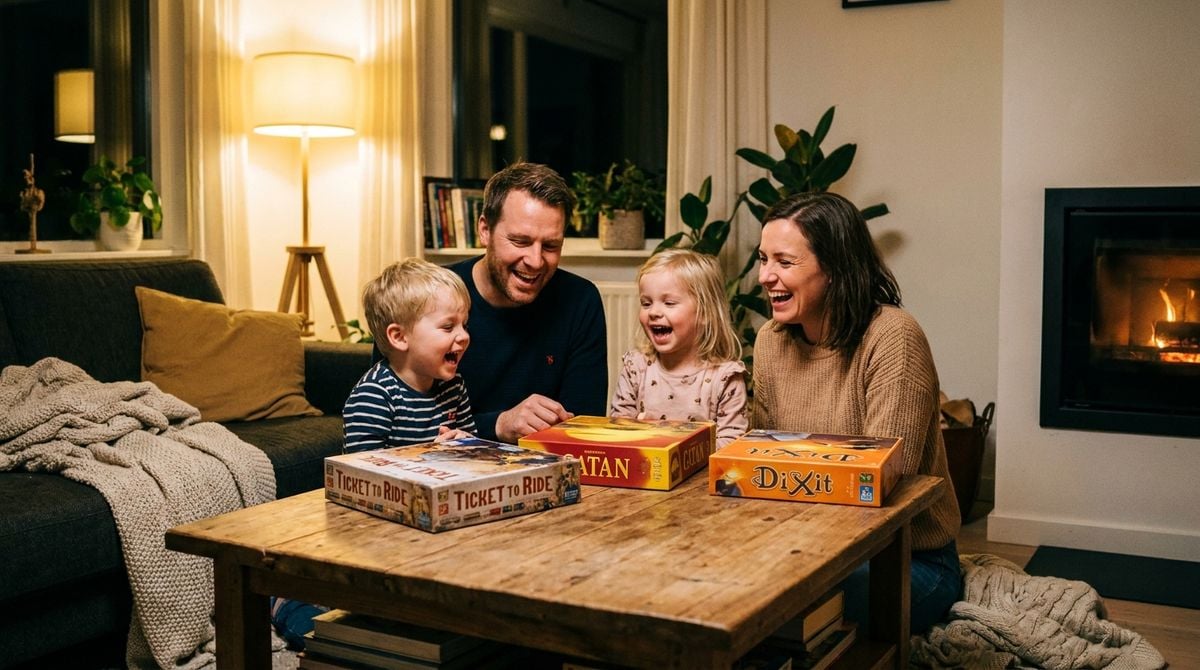
A family game night can be wonderful, or it can quickly become a battle between a bored teenager, a restless child and a grandparent who wants to play something slower. Choosing the right board game is part art and part planning. The goal is to find something that everyone can understand, enjoy and take part in, without one player dominating or another giving up early. This article offers practical ways to make that choice easier.
Start with the youngest and oldest players
The youngest and oldest players set the boundaries. A game that a young child can follow may feel too simple for an adult, while a complex strategy game may leave a child lost after the first few turns. Look for games with clear rules that take a few minutes to explain, and with turns short enough that nobody waits too long.
Ask yourself how each person prefers to play. Some enjoy quiet thinking, others like chatter and bluffing, and some just want to move pieces and see what happens. Mixing these styles can work well, but only when the game gives each player a meaningful role.
Look for shared decisions
Games that rely on cooperation often suit mixed groups, because everyone shares the same goal. Players work together against the board or the clock, which reduces the feeling of being beaten by someone older or more experienced. Cooperative games can still be challenging, and they often spark useful conversations about strategy.
Competitive games can work too, especially when the scoring is simple and luck plays a small part. Games with short rounds allow players to recover from a bad turn quickly. Avoid games where one early mistake can eliminate a player for the rest of the evening, because that is the fastest route to tears.
A checklist for picking the game
Before you buy or bring a game to the table, run through this list:
- Check the age range on the box, and treat it as a guide rather than a rule.
- Read the rules together to see whether they are easy to follow.
- Estimate how long a full game will take for the least patient player.
- Decide whether the game needs reading skills, and whether everyone has them.
- Make sure the pieces are sturdy enough for little hands.
- Keep a back-up game ready in case the first choice falls flat.
Teach rules in small pieces. Explain the basic turn first, play a practice round, and only then introduce special cards or advanced actions. Younger players learn faster when they can see examples, and older players appreciate a clear summary they can refer back to.
Readers may also want to visit Blog Money 4 U. You can also visit private-bad-credit-lenders.com for more reading. For a related read on this site, see Smart Financial Habits for Global Freelance Audio Artists. Take turns choosing the game, and you will soon discover what your household enjoys most.
Keep the evening flexible
Even the best game can fail if the mood is wrong. Allow players to change roles if someone finds the game dull. A child might act as banker or card dealer, while a teenager takes charge of scoring. Give everyone a moment to celebrate a success, however small, so the evening feels generous rather than competitive.
Have a plan for the end of the game. Some families prefer a rematch, others want to choose something quieter, and some simply stop when the first player yawns. Agree the ending in advance, so nobody feels forced to continue when they have had enough.