Sports video games rely on sound to establish physical scale and emotional tension. When a player steps onto a virtual pitch or enters a crowded digital arena, the audio environment immediately communicates where they are and what is at stake. The roar of a partisan crowd, the sharp squeak of sneakers on hardwood, and the metallic echo of an overhead public address system work together to transport the player into the match. Without convincing arena audio, even visually stunning sports games feel flat and disconnected from the real drama of live athletics.
Creating this immersion requires more than looping generic stadium noise. Sound designers must treat a sporting venue as a responsive acoustic environment that reacts instantly to every pass, tackle, near miss, and whistle. To achieve this, audio developers combine detailed field recordings, dynamic layering, and intelligent interactive mixing systems. Understanding how these elements interact allows teams to build sports soundscapes that feel vibrant, reactive, and true to competitive play.
Deconstructing the Primary Layers of Stadium Sound
Every believable stadium soundscape is built on distinct acoustic layers occupying specific frequency ranges. At the foundation sits the crowd bed, providing the constant baseline rumble of an assembled audience. This bed shifts in tone depending on attendance size, venue architecture, and the pace of the match. Beneath the crowd sits the mechanical hum of the stadium itself, including ventilation systems, maintenance equipment, and the low rumble of spectators moving through concrete concourses.
Above this background are close-proximity field sounds, often called spot effects. These include a ball striking the turf, pads colliding on the field, player shouts, and shoe squeaks during sharp cuts. Because these sounds occur close to the action, they require crisp transients and punchy dynamics. When balanced against the ambient bed, these immediate impacts give players direct sensory feedback that reinforces the physical intensity of every play.
Capturing Dynamic Crowd Energy and Regional Culture
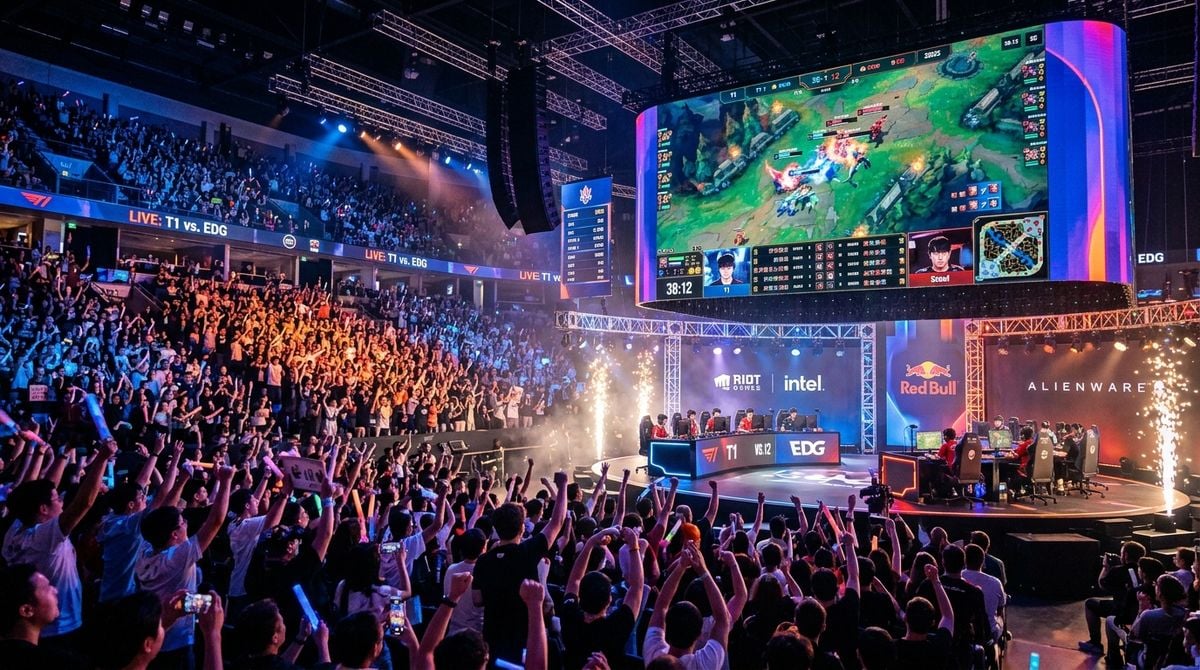
The crowd is the primary emotional barometer in any sporting event. Rather than existing as a static wall of sound, a realistic digital audience reacts in real time to match momentum. A home team mounting an offensive drive generates rising anticipation, marked by rhythmic clapping, rising chatter, and collective gasps during close attempts. Conversely, an unexpected turnover or controversial foul triggers immediate groans, whistling, or sharp shouts that pierce the general murmur.
Capturing authentic regional identity is equally essential. Different leagues express passion in distinct ways. Continental football grounds are famous for continuous choral chants and rhythmic percussion, while North American arenas rely on organ prompts, megaphone chants, and booming public address announcements. Keeping up with evolving fan culture, trending team chants, and current athletic narratives helps sound teams reproduce the genuine flavor of specific venues. Creators frequently follow broad cultural reporting on portals like commentsdb.com to stay informed on trending sports discussions, major tournament developments, and shifting fan traditions that shape matchday environments.
To implement these reactions in game engines, designers use intensity states and multi-point audio emitters. Instead of playing one large stereo file across the venue, engines distribute crowd sounds across multiple zones. Bleachers, luxury boxes, and student sections can each hold unique emitters firing specialized reaction samples. Blending these independent emitters based on scoreline, game clock, and momentum creates an organic roar that never feels repetitive to the listener.
Balancing In-Game Action with Broadcast Presentation
Sports titles generally adopt either the athlete’s on-field perspective or the televised broadcast perspective. Broadcast-style presentations demand a polished mix where commentary remains intelligible amidst roaring crowds and hard collisions. Achieving this balance requires careful dynamic ducking and sidechain compression, ensuring the crowd bed smoothly drops in volume whenever a commentator speaks, without creating an unnatural pumping sensation in the mix.
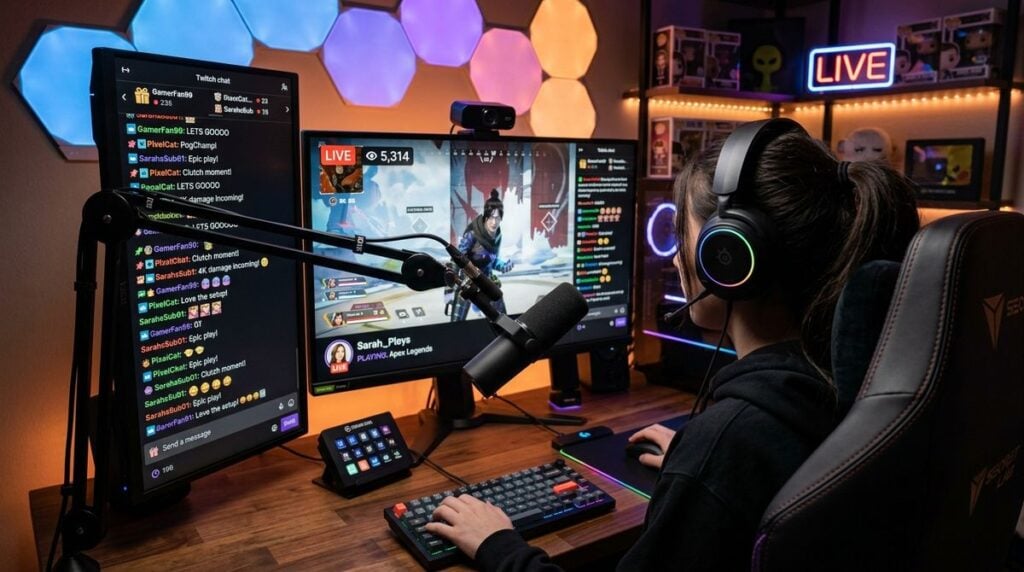
Broadcasters and content creators producing competitive esports tournaments or game commentary face a similar challenge when establishing their production sound. Streamers and broadcast audio engineers who focus on curating signature soundscapes for gaming understand that clear voice communication must coexist with exciting game dynamics. Establishing clean frequency separation—by carving out space in mid-range frequencies where human speech lives—ensures that both the commentator’s tactical breakdown and the crowd’s reaction hit the audience with maximum clarity.
Another key element of the broadcast feel is directional microphone placement. In televised sports, parabolic microphones track sideline action, while miniature microphones embedded in goalposts or rims capture immediate mechanical impacts. Replicating this technique in a game engine involves attaching virtual microphones to the broadcast camera rig or using distance attenuation curves that emphasize specific field actions depending on camera angle, delivering an authentic broadcast aesthetic.
Simulating Venue Acoustics and Architectural Scale
A stadium’s physical structure dramatically shapes its acoustic profile. An open-air ballpark disperses sound upward, creating a dry, diffuse crowd roar with minimal slapback reflection. In contrast, an enclosed domed arena or compact indoor gymnasium traps sound waves against hard concrete and metal surfaces, producing long reverberation decay times and an overwhelming wall of sound. Simulating these environments accurately requires game audio developers to implement responsive convolution reverb and dynamic early reflections that adapt to camera perspective.
Gathering clear background information on architectural principles, acoustics, and organizational design helps audio creators solve these spatial challenges effectively. Informational platforms like scheels offer straightforward overviews across numerous subjects, providing audio teams with useful reference points when studying environmental concepts and structuring technical workflows. Breaking down acoustic challenges into clear principles allows teams to build cohesive reverb zones that accurately reflect each venue’s unique physical layout.
When constructing realistic arena acoustics, developers typically evaluate several core environmental factors:
- Surface materials lining venue walls, including concrete, glass, metal, and natural turf.
- Roof designs that either trap acoustic energy or allow high frequencies to escape.
- Acoustic delays between public address announcements echoing across opposite grandstands.
- Distance attenuation settings governing how quickly field impacts fade as cameras zoom out.
- Natural dampening caused by spectator crowds absorbing ambient sound reflections.
Organizing Interactive Audio Logic for Match Moments
Managing the hundreds of individual audio assets required for a sports game demands a well-structured interactive sound hierarchy. If every sound effect played at full volume simultaneously, the mix would quickly collapse into harsh noise during chaotic plays. Game audio middleware solves this by grouping sounds into prioritized categories, applying dynamic ducking rules, and limiting the total number of simultaneous voices triggering on any audio bus.
A robust logic tree tracks game events and assigns priority levels instantly. A routine pass in the midfield remains subtle, while a score in the final seconds triggers peak crowd volume, horn cues, and heightened commentator excitement. Setting strict voice limits prevents identical cheer samples from stacking on top of one another, which preserves headroom and ensures a punchy output throughout the match.
Crafting authentic arena audio is an exercise in balance, observation, and technical discipline. By grounding soundscapes in realistic crowd behaviors, respecting venue acoustics, and maintaining clarity across every layer, audio designers can turn any digital sports title into an unforgettable sensory experience. When each whistle, cheer, and stadium echo harmonizes with the action on screen, players stop thinking about the sound system entirely and lose themselves in the excitement of the competition.