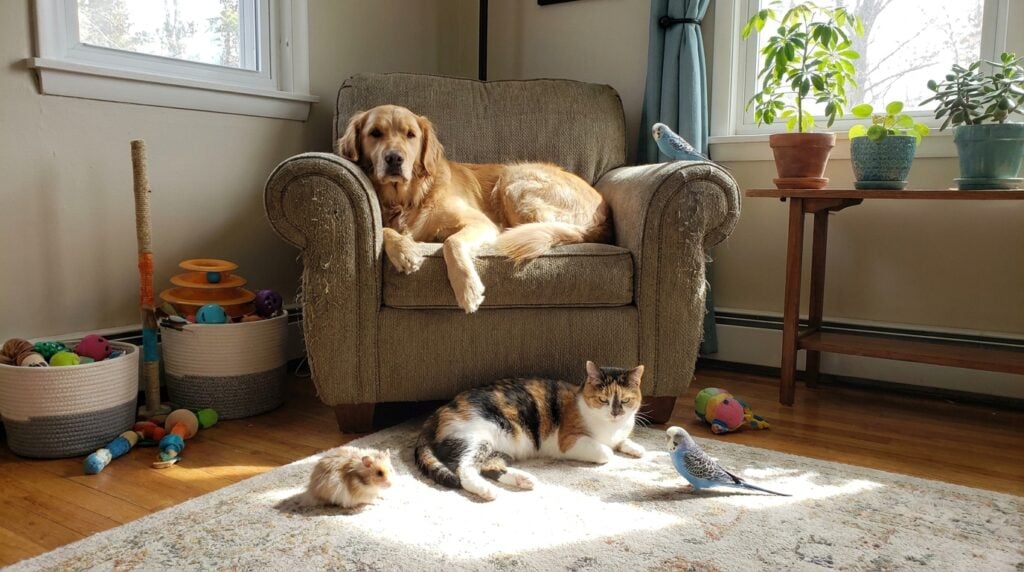
Setting up a dedicated creative space is one of the most rewarding milestones for any audio producer, gamer, or digital artist. A well-designed room provides ample room to record music, practice instruments, and immerse yourself in interactive entertainment. When you share your home with animals, however, your creative space needs to serve dual purposes as a functional production hub and a safe, welcoming habitat for your companion animals.
Pets naturally gravitate toward the rooms where their humans spend the most time. If you spend long evenings editing audio, tracking vocals, or conquering online campaigns, your companion will likely settle near your desk. In our previous look at streaming music and games with pets, we examined how animals fit into live broadcasts. Creating a physical workspace that actively supports both high-end electronics and curious animals requires a thoughtful, hands-on design strategy.
Taming Cables and Securing Fragile Gear
The primary hazard in any studio or gaming setup comes down to exposed wiring. Power cords, headphone extensions, instrument leads, and monitor connections look surprisingly inviting to playful pets. Chewing on live electrical lines poses an immediate safety hazard, while a sudden yank on an instrument cord can send fragile hardware tumbling off a desk.
Start your room setup by elevating every power strip off the floor and mounting it directly underneath your desk frame using heavy-duty brackets. Run audio and data lines through rigid, split-tubing cable conduits that deter curious teeth. For instruments like electric guitars, bass guitars, and synthesizers, keep gear on secure wall hangers rather than floor stands to avoid accidental bumps during energetic moments.
Cover empty wall outlets with protective safety caps and bundle loose cables together with reusable hook-and-loop fasteners. Using wireless peripherals such as cordless headphones and controllers can further reduce dangling wires that might attract batting paws or wagging tails during intense gaming sessions.
Managing Volume and High-Frequency Sound Exposure
Music producers and gamers love rich bass responses, crisp high-end transients, and broad dynamic audio ranges. Animals, however, perceive sound across a much wider frequency spectrum and with far greater sensitivity than humans. Sudden sonic events such as game explosions, aggressive synthesizer sweeps, or loud snare drum rimshots can easily trigger anxiety in sensitive animals resting nearby.
Establishing healthy monitoring practices protects both your creative output and your animal companion. Keep your nearfield studio monitors at moderate conversation levels while mixing or gaming, and switch to open-back headphones when you want to experience dynamic volume peaks. Installing acoustic treatment panels made from dense mineral wool not only tightens the acoustic profile of your room but also absorbs harsh high-frequency reflections that can bother sensitive ears.
Learning how different animal temperaments react to sound helps you design a calmer room. When exploring broader advice on nurturing animal well-being and daily domestic balance, visiting Geek Fishing provides helpful guidance for maintaining a pet-friendly lifestyle alongside modern household hobbies.
Building a Safe Resting Zone Within Your Workspace
Rather than continually shooing your pet away from your rolling studio chair, offer them a dedicated sanctuary within the room. Animals appreciate designated spaces where they feel sheltered yet connected to whatever you are doing at your console or workstation.
Place an orthopedic pet bed in a quiet corner away from rolling casters, subwoofer cabinets, and foot-pedal assemblies. Placing the bed under a sturdy side table can simulate a cozy den, helping your companion feel protected against sudden overhead movements or changes in room lighting during gaming sessions.
Equipping this personal nook with comforting items keeps your animal occupied while you record or play:
- A durable, washable orthopedic cushion with non-skid backing
- A heavy ceramic water dish placed far away from wall sockets and power strips
- A selection of quiet chew toys made from natural rubber to prevent squeaker noise on microphones
- A soft fleece blanket that carries familiar household scents to promote deep relaxation
By defining this comfortable territory, you give your animal a secure retreat that discourages them from climbing onto warm computer chassis or curling up against sensitive keyboard foot-switches.
Balancing Focus Blocks with Outdoor Play and Care
Long sessions in the studio or in cooperative game lobbies can easily stretch across hours without a break. Pets thrive on structure, predictable routines, and regular exercise. If an energetic animal spends the entire afternoon cooped up in a quiet room, restlessness can quickly manifest as vocal barking, scratching at doors, or pawing at equipment.
Build intentional pauses into your creative calendar. Taking regular short intervals to walk your dog, engage in interactive play, or practice basic agility commands allows your pet to expend energy. Afterward, they are far more likely to nap peacefully beside your workstation while you finish mastering an album track or editing a video clip.
There are also times when home projects simply become too loud or crowded for domestic pets, such as drum tracking sessions, loud band rehearsals, or extensive equipment renovations. For those demanding occasions, consulting community recommendations on ThePitsky.com can assist in finding comfortable boarding facilities and structured activities to keep your companion happy and secure while your home remains noisy.
Improving Ventilation and Establishing Clean Studio Habits
Electronic equipment generates heat, which naturally draws cooling airflow through internal fans and heatsinks. Unfortunately, pet dander and shedding fur can rapidly clog computer intakes, audio amplifier vents, and studio monitor ports. Accumulated hair can cause overheating and shorten the lifespan of valuable creative machinery.
Position your desktop computer and gaming console on elevated shelves or desktop risers rather than directly on the carpet. Place magnetic dust filters over computer air intake vents, and run a quiet air purifier equipped with a true particulate filter inside your room to capture airborne dander before it settles onto your gear.
Reinforce positive room etiquette through gentle patience. Reward your pet with healthy treats whenever they choose to relax on their own bed rather than jumping onto equipment desks. Over time, your companion will associate the studio with calm companionship, creating an inspiring environment where music, gaming, and animal care exist in effortless harmony.
Harmonizing Creative Passions with Daily Pet Care
Transforming your creative space into a shared sanctuary does not require sacrificing production quality or gaming performance. With proper cable containment, mindful sound management, and an inviting resting area, you can build a studio environment that fuels your artistic endeavors while prioritizing animal comfort.
Taking the time to consider animal needs alongside your hardware setup creates a healthier daily routine for everyone. When your companion feels relaxed and secure, you can immerse yourself completely in your favorite music and games, knowing your pet is happy and safe right by your side.